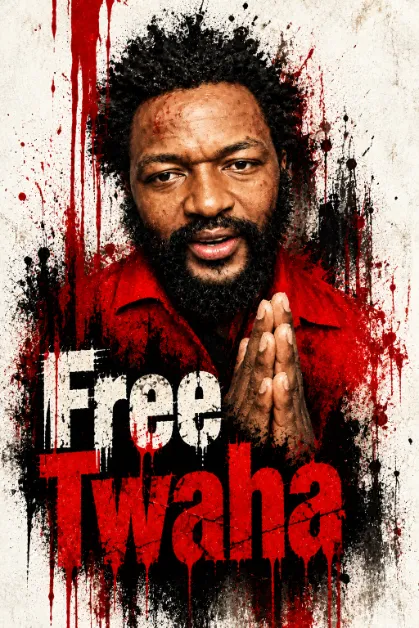

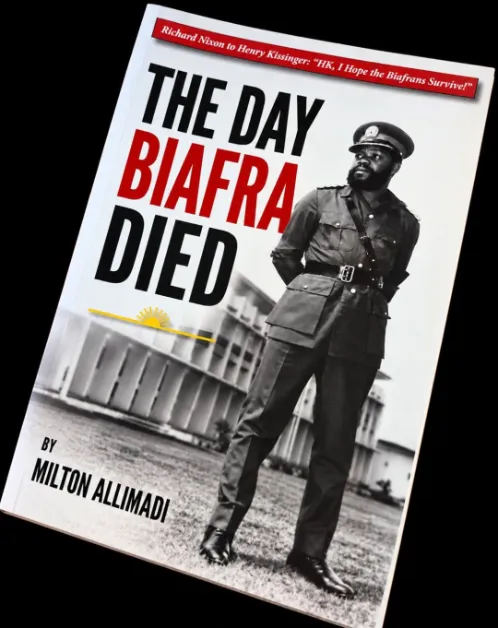
Book Review: The Day Biafra Died
Biafra, the Politics of Starvation and the Failure of International Diplomacy
30 Oct, 2026
Share
Save
If you are an ardent reader of books, you will agree with my observation and judgement that there are types of books that tell us what happened in history, and there are also those particular books that summon history from its grave specifically to interrogate its witnesses, examine its wounds and compel the dead to testify against the living. Prof. Milton Allimadi’s The Day Biafra Died belongs to the latter category. While I enjoyed reading it, I found out that it is an extraordinary work of historical excavation, investigative journalism and political literature, written with the curiosity of a detective.
I approached this book knowing that Biafra had died, but what I did not know was how many hands had participated in digging its graveyard, how many hypocritical governments had stood around it pretending to mourn, and how many opportunities for its survival had been squandered in the diplomatic corridors of Washington, London, Paris and Lagos. So, it is important to note that Prof. Allimadi does not merely revisit the Nigerian Civil War of 1967–1970; he enters the neglected archives of that catastrophe, disembowels them, and returns carrying documents that disturb the comfortable assumptions through which much of Africa's postcolonial history has been narrated.
The result is a book that reads at times like a political thriller, except that the corpses are real, the starving children were real, and the men conducting their diplomatic calculations were not fictional villains invented by a novelist seeking to entertain his readers. They were presidents, generals, diplomats, journalists and international actors whose decisions helped determine whether millions of human beings would eat, flee, fight or die.
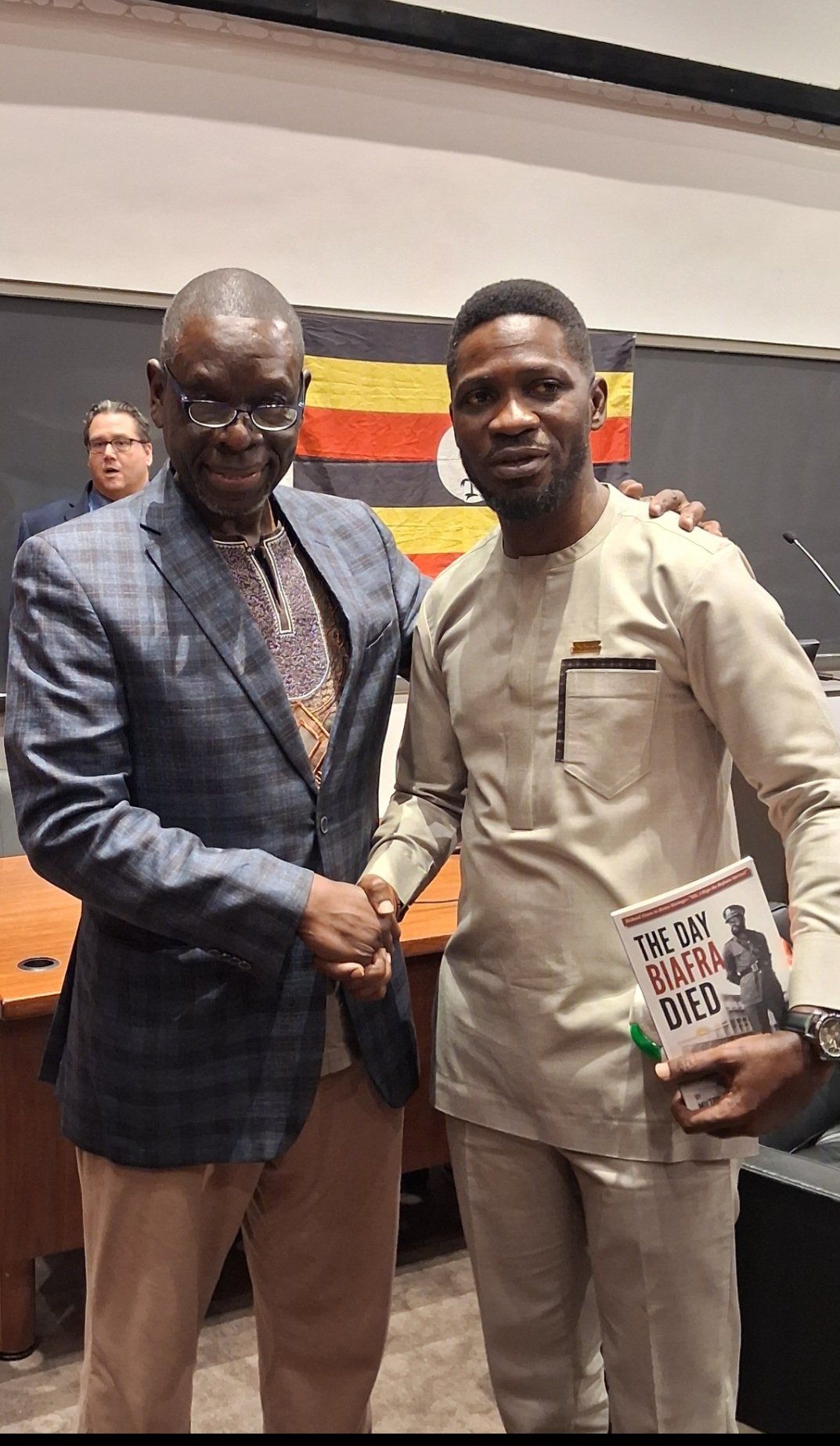
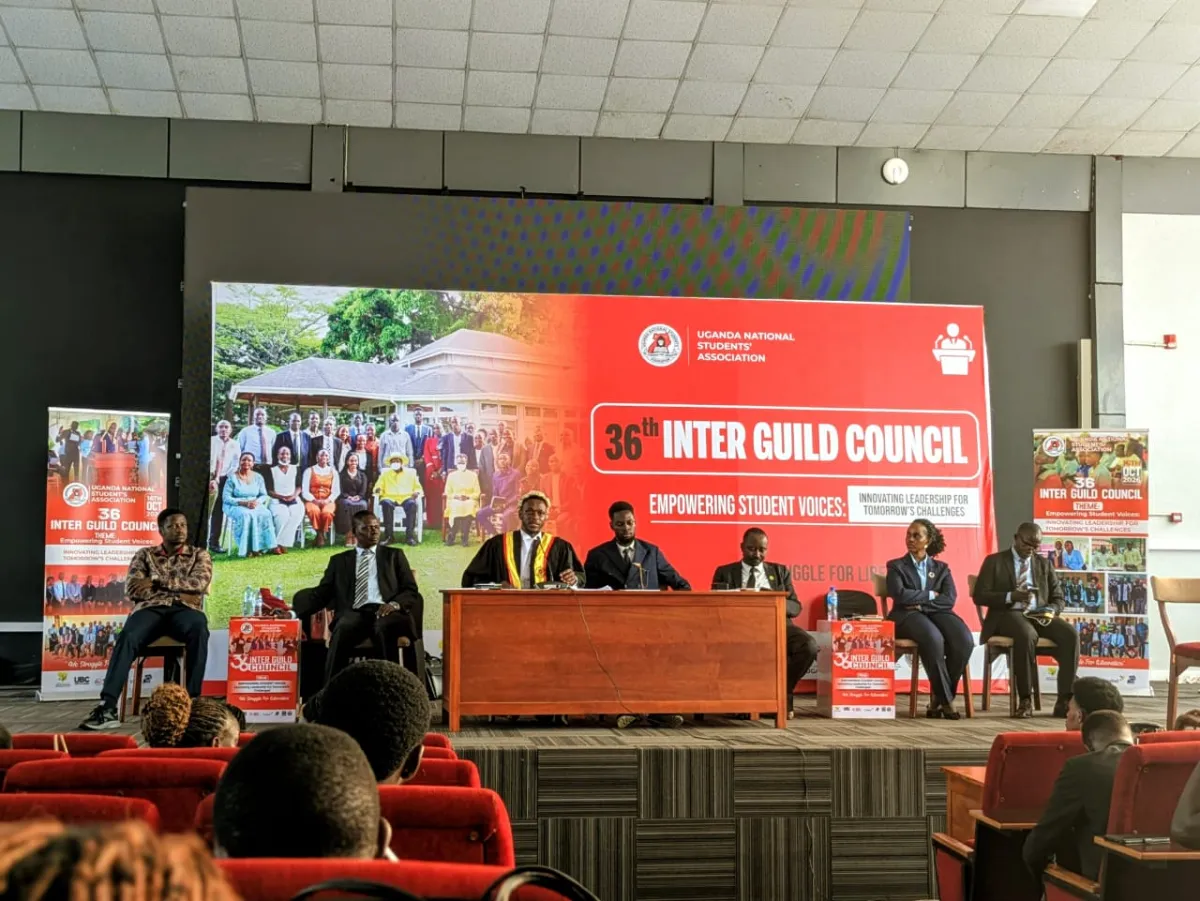
Prof. Milton Allimadi with Ugandan opposition leader, Bobi Wine.
And therein lies the terrible magnificence of Allimadi's achievement. He makes history intimate without diminishing its magnitude. He takes an international conflict, with its formidable machinery of diplomacy, intelligence and warfare, and reminds us that beneath every memorandum marked confidential there were ordinary people whose lives depended upon what powerful men decided over lunch.
The book's opening revelation is irresistible. In April 1969, Lloyd Garrison, a correspondent for The New York Times, sat in a Paris restaurant with the Swedish aviator Count Carl Gustaf von Rosen, who disclosed plans to establish a small Biafran air force and launch surprise attacks against Nigerian military targets. Garrison subsequently informed his editor, Seymour Topping, in correspondence dated 25 April 1969. More than a month before the attacks became a military reality, an American newspaper possessed advance knowledge of an operation that could alter the course of an African war.
Imagine the scenario: somewhere in Nigeria, generals were preparing for war, calculating their military advantage and guarding their secrets. Meanwhile, in Paris, a journalist was discussing a clandestine aerial operation over lunch, and the details were travelling across the Atlantic to a newspaper office. To my understanding, war is supposed to be the solemn business of generals.
Prof. Allimadi reconstructs this episode from archival correspondence while exposing the uncomfortable relationship between journalism, sympathy and participation. Garrison had witnessed the massacres of Igbo civilians and developed sympathy for the Biafran cause. His relationship with von Rosen went beyond the ordinary distance between a reporter and his subject. Here, Allimadi confronts a question that ought to trouble every serious journalist in this world: what happens when the obligation to report truth encounters the moral impulse to assist people facing possible annihilation? As we all know, it is a piece of cake to preach journalistic neutrality from a comfortable newsroom. It becomes considerably more complicated when the people one is reporting about are starving, their communities have suffered massacres, and their future appears to depend upon the decisions of men who may never visit the places they are discussing. Prof. Allimadi neither reduces this dilemma to a classroom exercise nor allows it to disappear beneath the romance of heroic journalism. He makes it part of the story and I basically enjoyed every bit of it.
The book becomes even more compelling when it examines Garrison's expulsion from Nigeria. His reporting on ethnic violence attracted the hostility of the Federal Military Government, which eventually expelled him in June 1967. The correspondence reproduced and discussed by Comrade Allimadi reveals the pressures confronting a journalist whose reporting had become inconvenient to the authorities. The government wanted to preserve its preferred account of national unity, while the journalist kept encountering evidence that the country was coming apart.
There is something painfully familiar about that contradiction to an African writer. A government may preside over a national calamity, but the person describing the calamity is accused of damaging the nation's reputation. The house may be burning, but the fellow shouting about the flames becomes the principal suspect in the investigation. It is a peculiar political philosophy under which the smoke is patriotic, and the fire alarm is treasonous.
The writer understands this absurdity, and his treatment of Garrison gives the book a significance extending far beyond Nigeria. It becomes a meditation on the relationship between truth and power, and on the risks faced by those who refuse to confuse a government's preferred narrative with the reality experienced by its citizens. The second half of the book takes us into the great theatre of international diplomacy, where morality and national interest frequently share a table but seldom agree on the bill. Britain, Nigeria's former colonial ruler, supported the Federal Military Government. The Soviet Union, Britain's ideological adversary, also supplied military assistance to Lagos. France supported Biafra through clandestine weapons shipments, while its interests in the region's oil complicated any romantic interpretation of its involvement.
Here, comrade Allimadi performs one of his finest acts of historical demystification—the Cold War, which supposedly divided the world into competing ideological camps, suddenly appears remarkably flexible when African interests are at stake. Britain and the Soviet Union could disagree about capitalism, communism and the future of civilisation, yet find sufficient common ground to support the same side of an African war. The tragedy is that Africa's newly independent states were still struggling to define sovereignty while powerful outsiders were calculating the commercial and strategic advantages of their survival, fragmentation or defeat. Prof. Allimadi reveals a continent whose formal independence had not liberated it from the appetites of foreign powers. The colonial administrator might have departed, but his commercial interests had apparently remained behind, acquired new stationery and began to communicate through diplomatic cables and manipulation.
Prof. Allimadi returns us to the terrible images of children suffering from kwashiorkor, their swollen bellies and wasted limbs becoming international evidence of a humanitarian catastrophe. The blockade had devastated the availability of food, medicine and other necessities. The suffering was so extensive that humanitarian relief became inseparable from the military and diplomatic struggle. This is where you, fellow reader, must confront the obscenity of war conducted through starvation. Hunger ceases to be merely a consequence of conflict and becomes entangled with military strategy. Food, which ought to sustain life, acquires political significance, and relief aircraft become objects of suspicion because the same routes may carry weapons of mass destruction, meaning that a child waiting for nourishment becomes dependent upon inhuman and stupid negotiations between governments whose representatives are adequately fed to belching.
I found this among the most disturbing and despicable aspects of the book because there is something profoundly indecent about the ability of powerful men to discuss the transportation of food as a matter of strategic advantage while children and pregnant women die waiting for it. Prof. Allimadi's archival evidence shows how the humanitarian crisis became entangled with the calculations of both the Nigerian government and Biafran leadership. I was basically, as a reader, consequently denied the comforting luxury of imagining that every decision made in the name of national survival necessarily served the people struggling to survive.
One of the book's most fascinating characters is Richard Nixon. Comrade Allimadi reconstructs the American president's growing involvement in the Biafran crisis through White House and State Department records. Nixon had publicly condemned the starvation of Biafrans before assuming office but once president, he sought ways to expand humanitarian relief and appointed Clarence Clyde Ferguson Jr to pursue arrangements with the opposing sides. The administration's position subsequently evolved towards a possible diplomatic shift favourable to Biafra. It is an arresting historical complication because Nixon, whose presidency would become synonymous with Watergate, appears here as a man sufficiently disturbed by Biafran suffering to challenge the limitations of American policy. Allimadi does not require us to rehabilitate Nixon's entire political career to recognise the significance of his interventions. History rarely provides characters who remain conveniently good or bad throughout every chapter of their lives. Human beings are more troublesome than that, and political leaders are particularly talented at producing contradictory evidence about themselves.
But the book's most consequential argument concerns the possibility that Biafra came closer to international recognition than many readers might imagine. Allimadi traces the negotiations surrounding humanitarian flights, the significance of the Uli airstrip, the consequences of the Biafran air attacks and the deteriorating relationship between Ojukwu and Washington. He then arrives at the broadcast of 6 November 1969, when Ojukwu publicly criticised the United States over its handling of relief arrangements.
Allimadi argues that this intervention helped destroy a diplomatic opening that might have altered Biafra's fate. The Biafran leader, concerned about the security implications of proposed relief arrangements, confronted an administration that the author believes had moved closer to supporting his cause than he understood.
This is the book's great historical provocation. Could a different decision have changed the outcome? Could the acceptance of a relief arrangement have opened the way towards recognition? Did a leader defending the sovereignty of his threatened republic inadvertently contribute to its destruction?
These questions are too important to dismiss and too complicated to answer with absolute certainty. Allimadi's interpretation is compelling precisely because he assembles the documentary circumstances that make it plausible. Yet a missed diplomatic opportunity is not the same as a guaranteed alternative history. Recognition, had it occurred, would still have confronted formidable military and political obstacles. The distinction matters, and it strengthens rather than diminishes the value of the author's investigation.
What Allimadi achieves is to rescue an important historical possibility from obscurity and submit it to serious examination. He makes the reader consider whether the fate of a struggling republic might have been influenced not only by battlefield defeats but also by imperfect information, diplomatic misjudgment and the tragic distance between what leaders believed and what was actually happening.
There is an extraordinary irony in the book's account of Ojukwu's departure. The Swedish aviator von Rosen, whose daring intervention had helped create Biafra's small air force, also piloted the aircraft that carried Ojukwu into exile. The man associated with an audacious attempt to strengthen the republic's military survival became part of the final journey of its defeated leader. A novelist inventing such an ending might be accused of excessive symbolism. History, fortunately for literature and unfortunately for humanity, is under no obligation to exercise artistic restraint.
The book does not end with the surrender of January 1970. Allimadi follows the principal figures beyond the conflict and examines the persistence of Biafran nationalism into the twenty-first century. This is an essential part of the narrative because military defeat does not necessarily resolve the grievances that produced a struggle for self-determination. An army may surrender, a flag may be lowered, and a government may cease to exist, yet the underlying questions of identity, belonging, security and political representation can survive for generations.
As a Ugandan writer and lawyer, I found this dimension especially compelling. African history is crowded with political settlements that declared conflicts concluded while leaving their underlying causes insufficiently addressed. Colonial boundaries became the inherited architecture of independent states, and the principle of territorial integrity often entered into difficult competition with demands for self-determination. Neither principle can simply be waved away. The challenge is to construct political arrangements in which communities can live securely without making either secession or coercive unity the only imaginable answer.
This book absolutely invites precisely this kind of reflection. It asks us to consider the responsibilities of states towards their citizens, the obligations of political leaders towards those they claim to represent, and the moral limits of military strategies that impose suffering upon civilian populations.
Its literary strength lies in the way it combines these large questions with particular human stories. Garrison's professional dilemmas, von Rosen's extraordinary adventures, Nixon's diplomatic interventions and Ojukwu's difficult decisions give the narrative movement and character. The archival letters and memoranda supply its evidentiary foundation. The children of Biafra supply its moral gravity.
I was particularly moved by Allimadi's account of August Harvey Martin, the pioneering African American aviator who volunteered for hazardous humanitarian flights into Biafra and died when his aircraft crashed in June 1968. His wife and two Red Cross representatives also perished. Such lives are easily lost in historical accounts dominated by presidents and generals. Allimadi restores Martin to the story, reminding us that history is shaped not only by those who command armies but also by those who risk their lives carrying food to strangers.
The book is not without questions deserving further scholarly argument. Its central interpretation of the lost opportunity for American recognition invites scrutiny of the distinction between presidential inclination, diplomatic possibility and a decision that could actually have been implemented. Its treatment of the conflicting calculations of Biafran and Nigerian leaders also invites further inquiry into how humanitarian necessity and military survival were weighed against each other. But these are the questions that serious historical writing ought to provoke. A book that merely confirms everything its reader already believes may be comforting. A book that compels the reader to reconsider established assumptions has performed a more valuable intellectual service.
And this is why I admire The Day Biafra Died. Allimadi has not produced another sentimental lament about an African tragedy. He has undertaken the more demanding labour of investigation. He has searched archives, examined correspondence, reconstructed decisions and connected events whose significance might otherwise remain scattered across institutional records. He gives the reader not simply a conclusion but the historical material with which to interrogate it.
His prose is accessible without surrendering intellectual seriousness. He understands that historical scholarship need not be written like a punishment imposed upon the reader for expressing curiosity. The narrative moves with admirable momentum, and its revelations are sufficiently dramatic without requiring fictional embellishment. Indeed, one occasionally suspects that the author had to restrain himself from adding a footnote assuring the reader that the extraordinary events really did occur.
Above all, the book reminds us that the dead have no opportunity to correct the accounts written about them. That responsibility belongs to historians, journalists, writers and researchers willing to revisit the evidence. A war does not become less deserving of examination because half a century has passed. The passage of time may bury the victims, but it does not necessarily bury the questions surrounding their deaths.
I would recommend this book to historians, lawyers, journalists, students of international relations, scholars of African politics and anyone interested in the relationship between power, sovereignty and human suffering. But I would also recommend it to the ordinary reader who wants to understand why the political history of Africa cannot be reduced to the familiar vocabulary of tribal conflict and military rebellion. Behind those convenient descriptions lie complicated struggles involving colonial inheritance, foreign interests, national identity, political ambition and the survival of communities.
The Day Biafra Died deserves to be read widely, discussed seriously and placed in libraries across Africa and beyond. It is the sort of book that should find its way into university seminars, journalism schools and the hands of readers who have been taught history primarily through the declarations of governments rather than the testimony of archives.
Milton Allimadi has performed a valuable act of historical recovery. He has returned to one of Africa's most devastating conflicts and brought back evidence, questions and human stories that demand renewed attention. The book's title announces the death of a republic, but its pages demonstrate that the consequences of that death have never been confined to the past.
Biafra died as a state in January 1970. Its history did not die with it. And thanks to Prof. Allimadi, readers have another important opportunity to examine what happened, what might have been, and what Africa must still learn from the tragedy.
This is a book worth buying, reading, preserving and arguing with. Above all, it is a book worth remembering.
About the author
Kakwenza Rukirabashaija is a Ugandan playwright, novelist and lawyer. He is the author of The Greedy Barbarian and Banana Republic: Where Writing is Treasonous. He was named the winner of the English PEN 2021 Pinter International Writer of Courage Award.